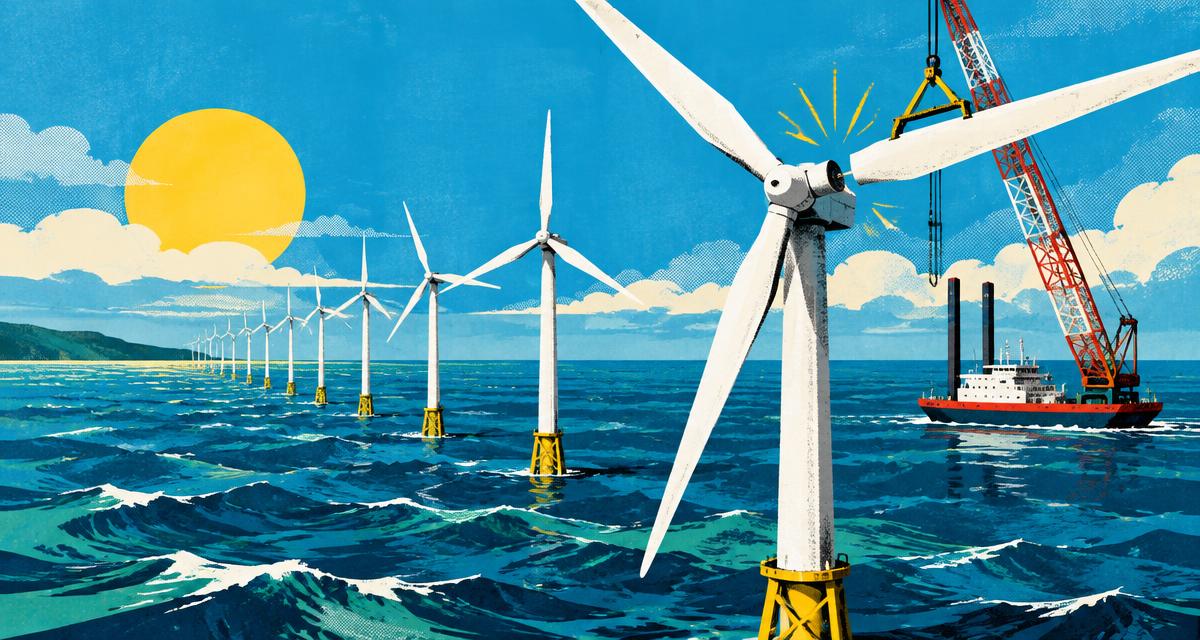
The last of 65 offshore turbines just clicked into place.
The final turbine is installed at Revolution Wind, a 704-megawatt offshore project built to serve Rhode Island and Connecticut.
Every serving. No expiration date. Page 3 of 3.

The final turbine is installed at Revolution Wind, a 704-megawatt offshore project built to serve Rhode Island and Connecticut.

HALO Trust has concluded humanitarian mine clearance in Kosovo, 27 years after the war left fields, roads and villages contaminated.

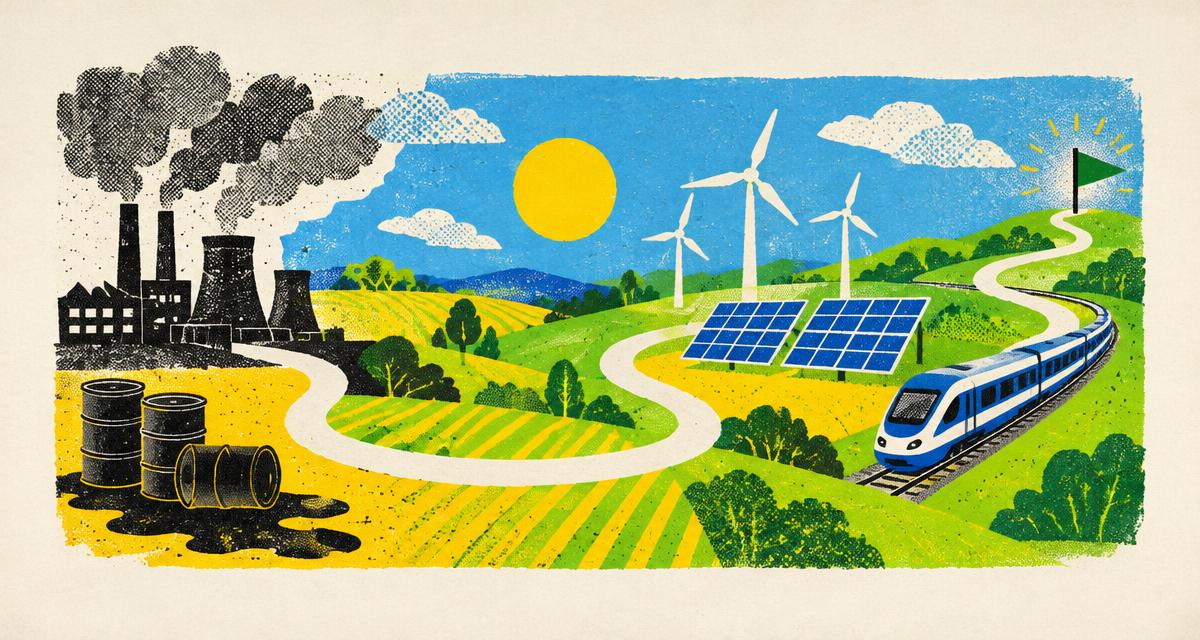
Europe's largest economy published a sector-by-sector plan to leave coal, oil and gas behind, only the third country to do so.
THE MEADOW GREW BACK.
Ten traditional chain moorings were replaced with eco-moorings that move with the tide instead of scraping circles through the seabed. Five years later, the damaged patches had shrunk by an average 93.6%.

Book Bunk and Nairobi City County restored Eastlands and Kaloleni public libraries as free civic hubs. Book Bunk reports patronage up more than 240%.

During one May morning count, Cycling Scotland recorded more bikes than cars on Leith Walk from 8 to 9 a.m.—a first for that route, not a claim about the whole city.
A WALL THAT BREATHES.
A 200-foot eroded bank at Sebastian Inlet State Park got 22 honeycomb reef arches and up to 90 red mangroves instead of a wall — finished September 10.
NOBODY REINTRODUCED IT.
Mongabay reports a giant anteater turned up in an Argentine reserve on its own, decades after the species vanished locally — a case for letting recovering habitat do the work.
FIFTY YEARS. NO DOG-MEDIATED HUMAN CASES.
Chile became the first South American country validated by WHO for eliminating dog-transmitted rabies as a public-health problem after more than five decades without a dog-mediated human case.
Côte d’Ivoire connected 3.56 million more people…
684,735 new connections. Around 3.56 million more people with access.
THE SPACE UNDER THE PANELS GOT BUSY.
Panels up. Wildflowers in. Insects followed.
CIVIC INFRASTRUCTURE: 1. POTHOLES: 0.
Two hundred thousand holes became not-holes.
DONE BY HAND.
Ten days, wooden dams, no machinery. Pools are already forming.
DAMS OUT. SALMON IN.
Four dams gone. 21,052 adult Chinook counted upstream across two seasons. Eighty-eight percent of their documented historic range reoccupied — early, and encouraging.
208 TURTLES, HAND-DELIVERED.
235 eggs in. 208 tiny turtles out.
THE MAP WAS THE PROBLEM.
Africa was not small. The map was weird.
RUBELLA, OFF THE LIST.
Decades of vaccination and surveillance turned a dangerous pregnancy infection into a preventable public-health victory.
THE LAND CHANGED HANDS.
An English grouse-and-sheep estate is being reworked around peat, wildlife and long-term restoration instead.
ONE BIRD BOUGHT THE LAND.
A bird nobody had scientifically recorded helped trigger a conservation network protecting habitat across Ecuador.
STONE IS LOAD-BEARING AGAIN.
The future of lower-carbon construction might involve a material humans have been stacking for thousands of years.
THE WATER IS COMING BACK.
A 23-square-mile tract of drained North Carolina peatland is being rewetted, replanted and restored to hold water, reduce fire risk, rebuild habitat and stop releasing so much stored carbon. Sometimes progress is admitting the ditch was a bad idea.
TRACHOMA, REGION-WIDE, GONE.
WHO has validated Timor-Leste’s elimination of trachoma as a public health problem. Because it was the last country in WHO’s South-East Asia Region where the disease was still suspected to be a public-health problem, the entire region has now cleared that threshold.
RABIES LOST ITS FOOTHOLD.
WHO has validated Bhutan’s elimination of dog-transmitted human rabies as a public-health problem — the first country in WHO’s South-East Asia Region to reach the milestone. Bhutan has gone more than two years without a human death from dog-transmitted rabies. Vaccines, surveillance and people showing up worked.