Honeybee hives organize antimicrobial materials into a colony-level defense system.
Honey, propolis, wax and fermented pollen form chemically distinct layers that help shape the microbes living inside a colony.
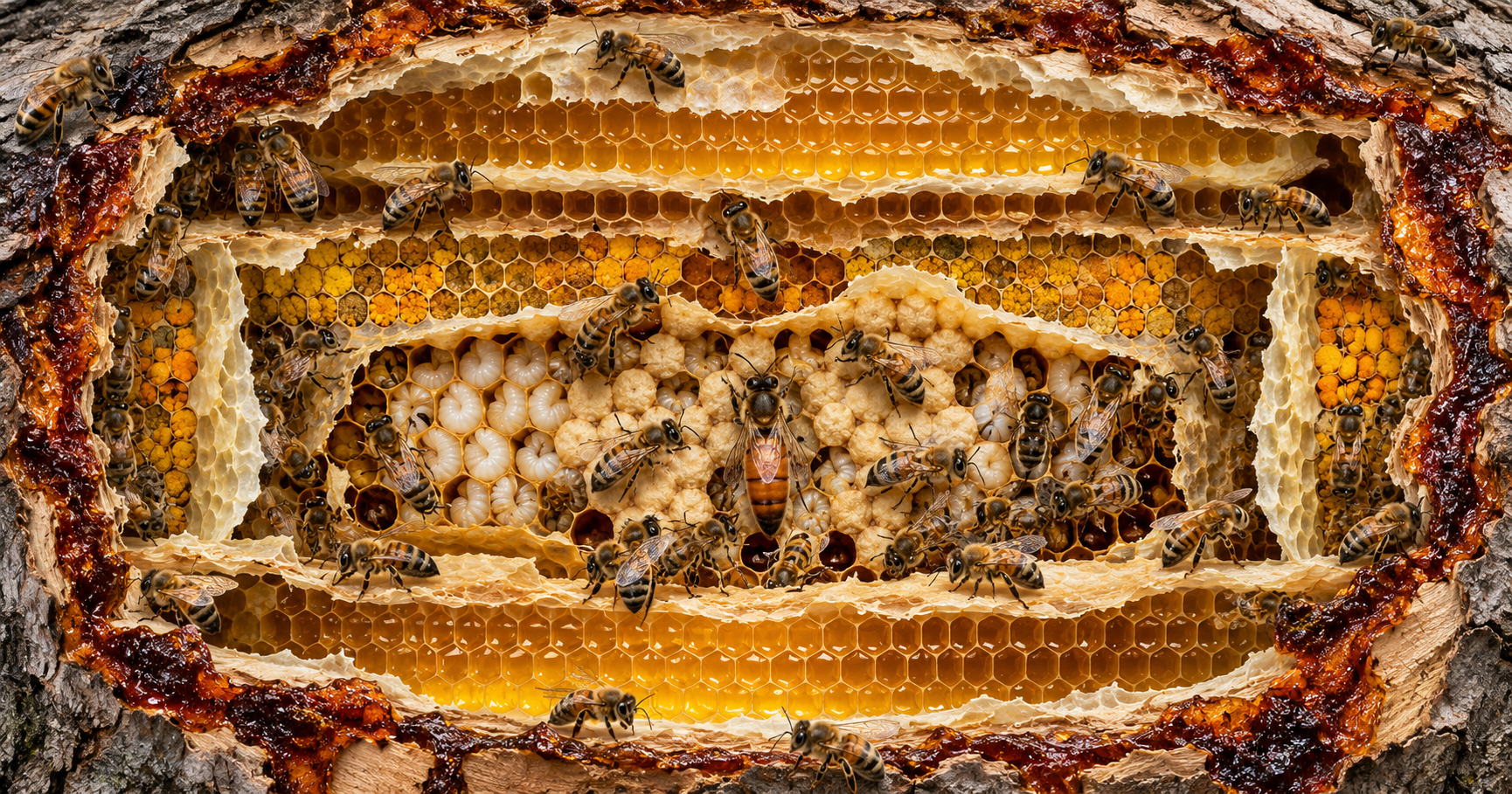
A peer-reviewed study published October 19 describes honeybee colonies as chemically organized environments in which hive materials help shape microbial communities and impede pathogen establishment.
WHAT HAPPENED
Researchers sampled 24 European honeybee colonies across five apiaries in New South Wales. Honey, propolis, fermented pollen, wax and adult bees had distinct chemical and antimicrobial properties, and those defenses were arranged differently from the outer hive toward protected brood and food stores. Propolis and honey showed strong antimicrobial activity, while the surrounding landscape influenced the chemical resources available to colonies. The work supports the idea of social immunity operating through the hive as well as individual bees.
WHY THIS IS HOPESLOP
A beehive is not merely a box full of insects. It is architecture, pantry, nursery and chemical ecology working together. The study adds a beautiful layer to what bees build while keeping the claim properly bounded: one regional sample, an observational design and a framework that still needs broader testing.
ORIGINAL SOURCEISME Communications / University of SydneyRead the original report
A DAILY ALLEGATION OF PROGRESS.
One good thing from the internet, every day. Nothing else.
MORE HOPESLOP

An Australian freight operator bought the country's first solar-electric refrigerated trailer unit.
Wickham Freight Lines adopted battery-powered refrigeration after an interstate test, removing the trailer's separate diesel engine without replacing the truck.

Delaware State Parks planted its 75,000th tree.
The final American holly completed a five-year goal spanning 17 parks, with trees placed for habitat, erosion control, riparian buffers and native succession.

Sixteen percent of new U.S. utility-scale solar now arrives with battery storage.
That share was just 2% in 2017, and reported project plans put it above 30% for 2027 and 2028.