Sixteen percent of new U.S. utility-scale solar now arrives with battery storage.
That share was just 2% in 2017, and reported project plans put it above 30% for 2027 and 2028.
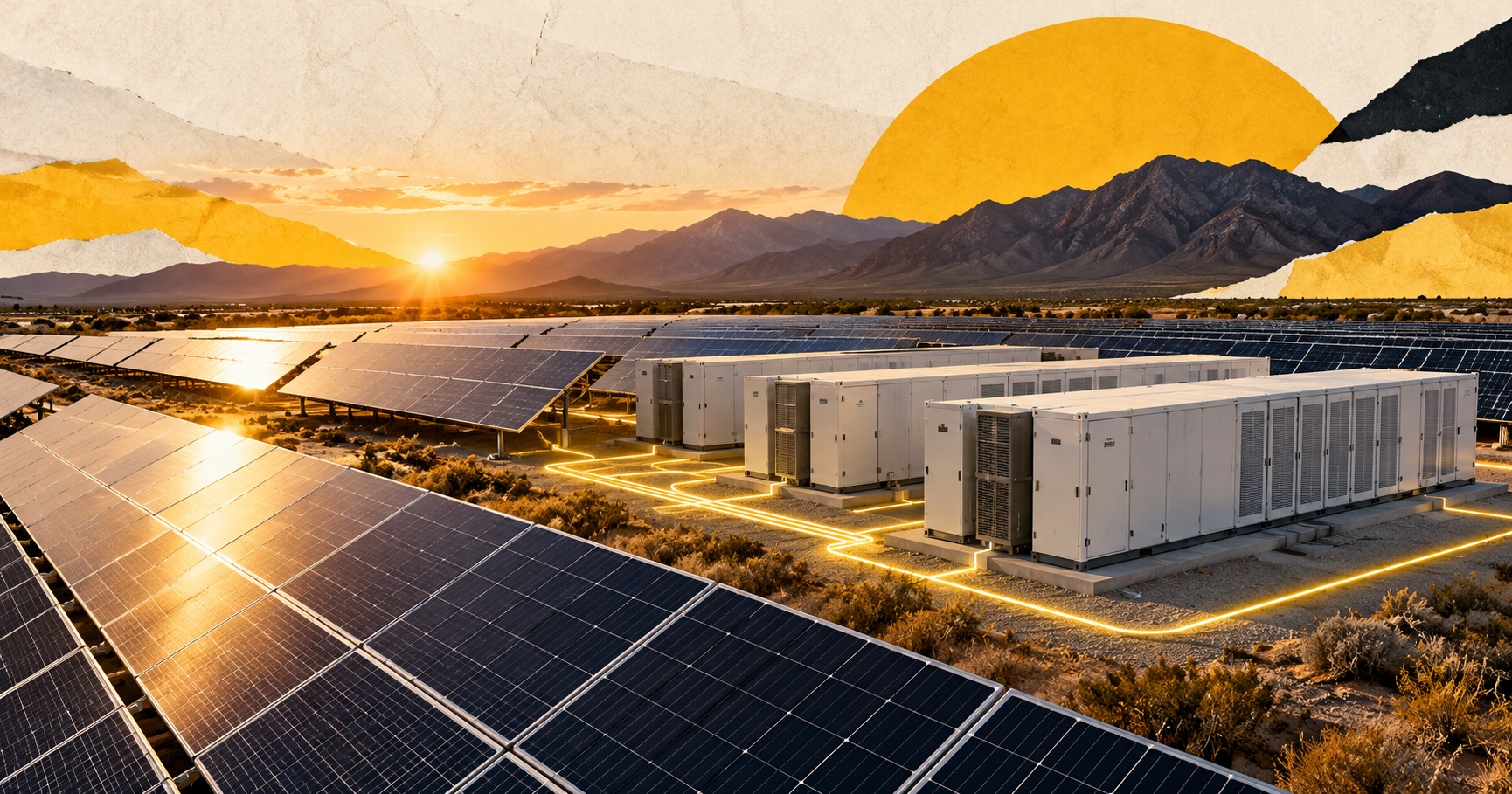
Through September 2026, 16% of the new U.S. utility-scale solar capacity added this year was paired with an operating battery system, up from 2% in 2017.
WHAT HAPPENED
The U.S. Energy Information Administration says full-year plans would lift the 2026 share to 19%, while developers report that more than 30% of solar capacity planned for 2027 and 2028 will have co-located storage. Solar now accounts for 13% of U.S. utility-scale generating capacity; 18% of that solar capacity is paired with batteries. The Southwest's co-location rate is more than twice the national average. These figures describe capacity, not electricity generated, and the 2027–28 values are developer plans rather than completed projects.
WHY THIS IS HOPESLOP
Solar makes electricity when the sun is available; batteries make more of that electricity useful when the grid needs it. A rising co-location share is the unglamorous infrastructure pattern that helps variable clean power become a more dependable part of the system.
ORIGINAL SOURCEU.S. Energy Information AdministrationRead the original report
A DAILY ALLEGATION OF PROGRESS.
One good thing from the internet, every day. Nothing else.
MORE HOPESLOP

Three rehabilitated sea turtles became releases 497, 498 and 499 at a South Carolina aquarium.
Honey, Hope and Buffalo returned to the Atlantic after months of individualized care for fishhook injuries and related complications.

Barbados eliminated mother-to-child HIV transmission as a public-health problem.
An independent WHO assessment found no such infant infections from 2022 through 2024, with 98% coverage for care, testing and treatment.

Malawi now reports its September measles-rubella campaign reached more than 5.8 million children.
The final WHO update says the nationwide drive met its target, including remote island and river communities.