A PAPER-THIN ROBOT SWAM THROUGH A MAZE ON MUSCLE CELLS.
Two fins. One layer of living muscle. A light to follow.
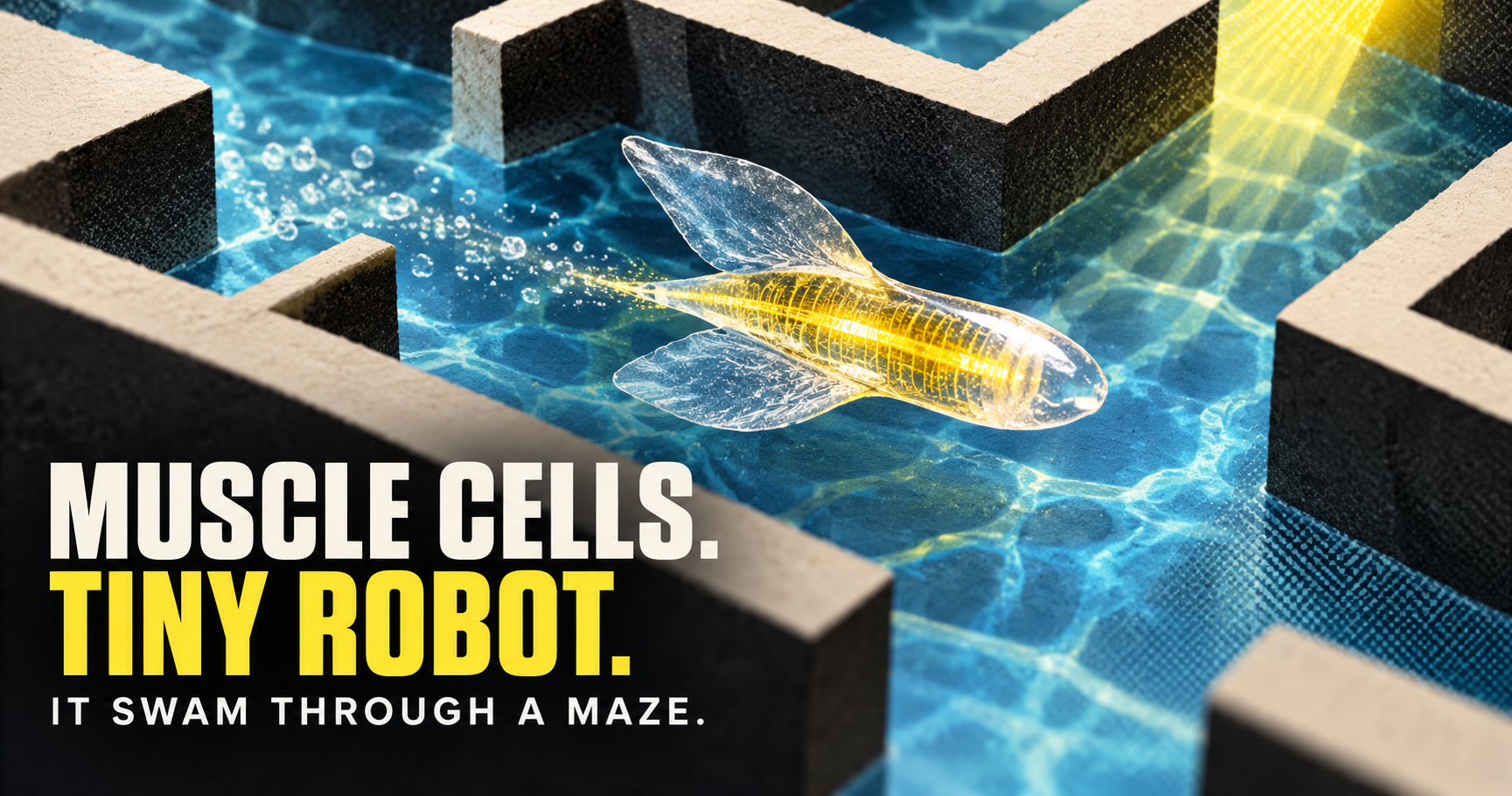
MIT researchers turned a half-millimeter gel film and a single layer of engineered muscle cells into a tiny swimmer that responds to flashes of light.
WHAT HAPPENED
Each side of the gum-stick-sized gel body acts as a fin. Muscle cells on the surface contract when illuminated, letting researchers steer the robot by flashing light on one fin or both. The prototype swam, turned and navigated a simple water maze at roughly four body lengths per minute.
WHY THIS IS HOPESLOP
It is a tiny machine with an unusually alive engine. The practical future is still speculative, but the core result is deliciously real: one thin sheet of trained muscle can pull a robot through water and around a corner.
ORIGINAL SOURCEMIT NewsRead the original report
A DAILY ALLEGATION OF PROGRESS.
One good thing from the internet, every day. Nothing else.