India says its navy rescued all 20 crew from a hijacked fishing boat.
The November 2 operation used a warship, reconnaissance aircraft and marine commandos; an earlier head-count discrepancy remains unresolved.
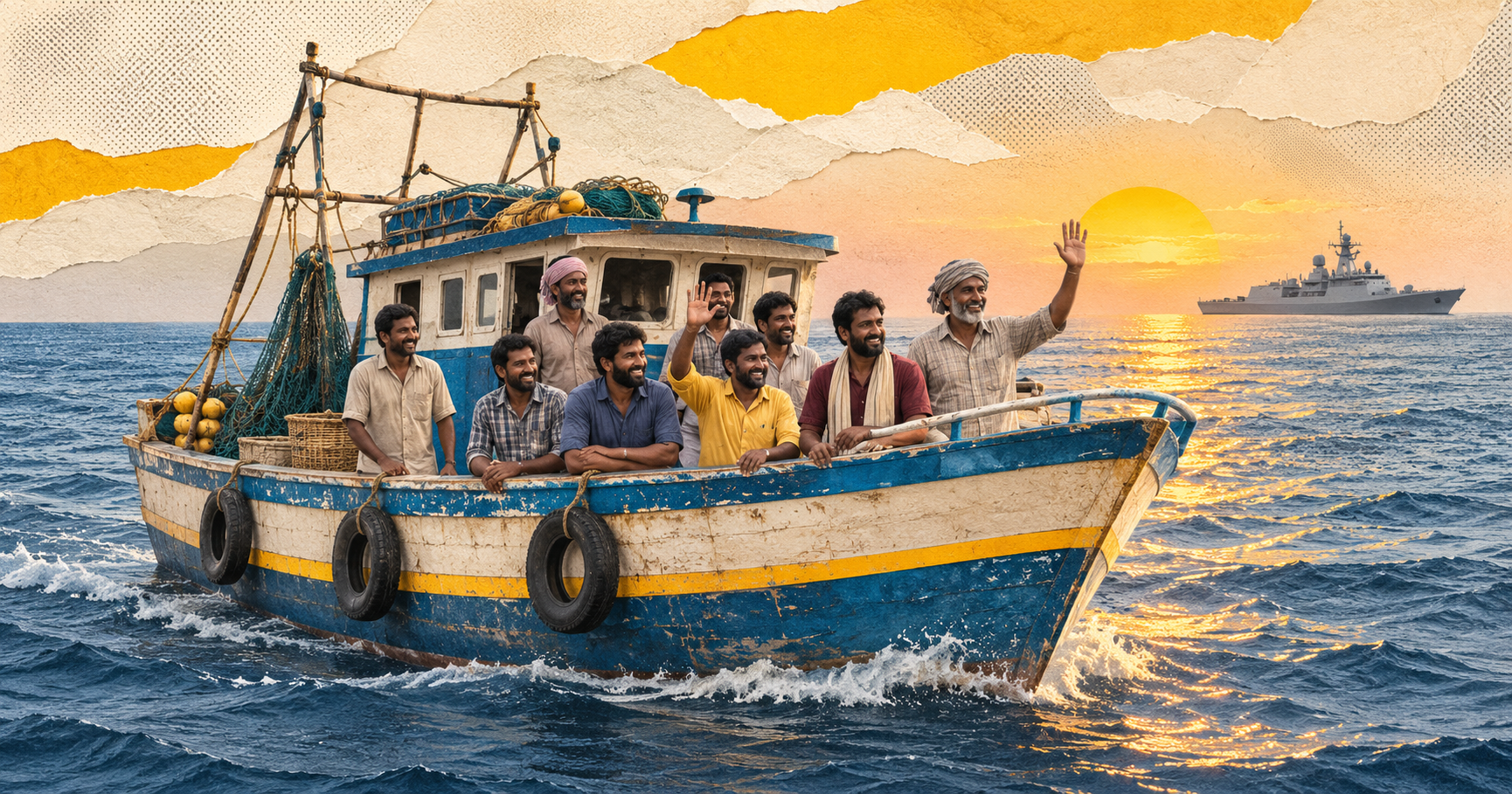
India's government says its navy completed a two-day operation on November 2 that freed all 20 crew members aboard the Iranian fishing vessel Azini after the boat was hijacked off Somalia.
WHAT HAPPENED
According to India's Press Information Bureau, a naval warship, reconnaissance aircraft and marine commandos coordinated the operation over roughly 48 hours, with the crew brought to safety and no crew casualties. The Associated Press reported a conflicting earlier account from Puntland that counted 21 crew and two guards and mentioned three minor injuries among people who later reached shore. Public reporting does not yet reconcile those numbers, so the confirmed claim here is the Indian government's account.
WHY THIS IS HOPESLOP
A rescue at sea is a chain of navigation, surveillance, restraint and people moving toward danger so strangers can get home. The outcome is hopeful; the honest uncertainty about the head count belongs in the story too.
ORIGINAL SOURCEPress Information Bureau, Government of IndiaRead the original report
A DAILY ALLEGATION OF PROGRESS.
One good thing from the internet, every day. Nothing else.
MORE HOPESLOP

Kazakhstan released its second Amur tiger into the wild.
The collared male follows Umit, released in July, in an experimental return to the Ile-Balkhash landscape.

Plant waste made a biodegradable waterproof coating without fluorine.
The SLIP material repelled water, survived stress and UV exposure, and broke down in a wood-fungus test.

Anode-free sodium pouch cells retained about 80% capacity after 1,400 cycles in a lab study.
The research paired practical cathode loading with fast-rate, low-temperature and high-efficiency results—but it is not yet a commercial battery.