Researchers turned plastic bags and bottles into a load-bearing adhesive.
The patented lab method uses light and chlorinated solvent chemistry to add useful polymer chains to two of the most common plastics.
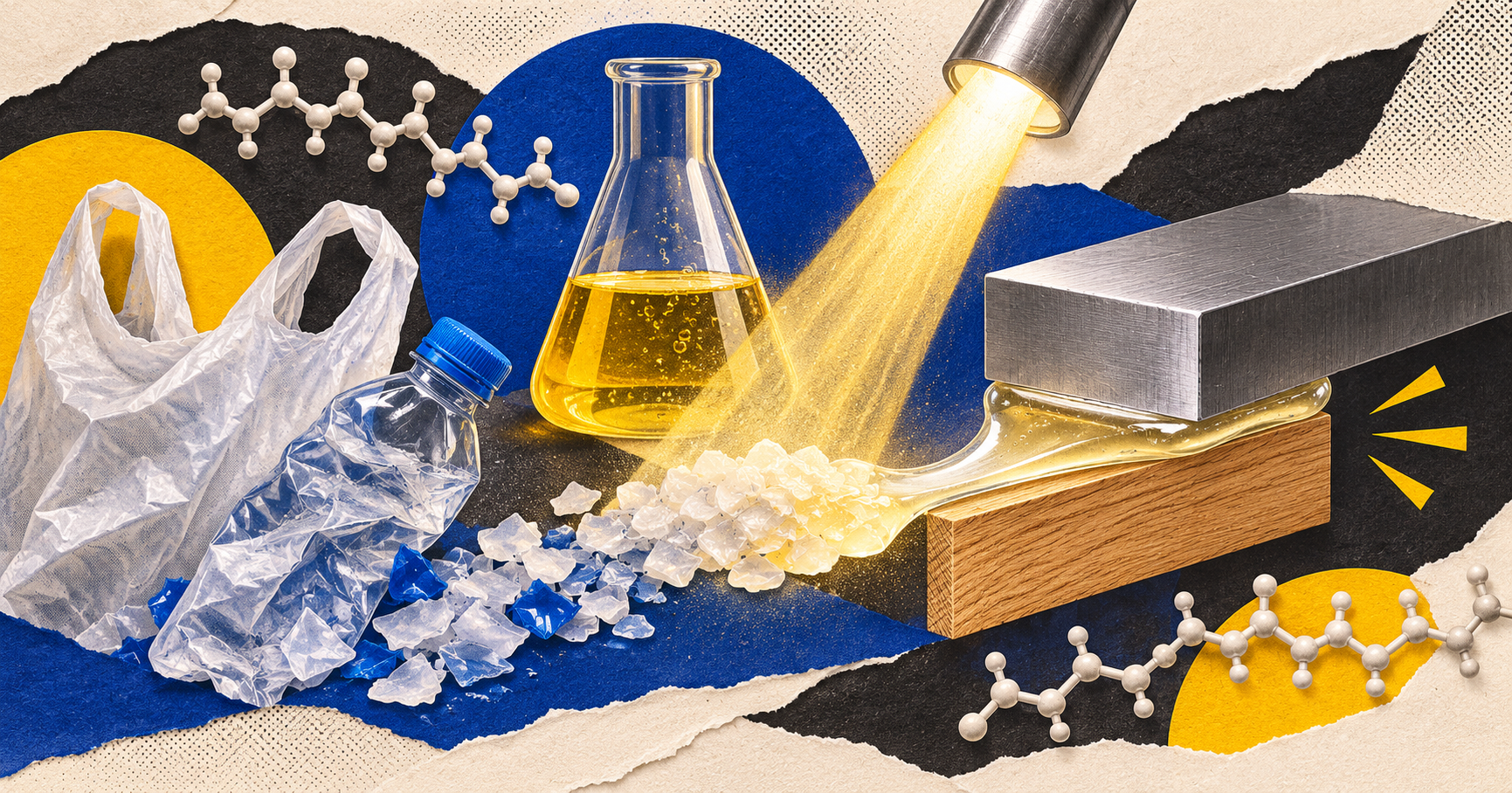
ETH Zurich researchers developed a way to graft new polymer chains onto waste polyethylene and polypropylene—the plastics common in bags, bottles and packaging—using light-driven chemistry in a single step.
WHAT HAPPENED
The waste plastic is dissolved in a chlorinated solvent, monomers are added and short-wavelength light generates radicals that create controlled grafting sites. The team used standard bags and bottles to make an adhesive whose strength on metal, glass and wood met requirements for load-bearing, high-stress industrial joints. ETH has patented the process; the researchers say other functions, including oxygen-barrier packaging, are possible.
WHY THIS IS HOPESLOP
Most plastic “recycling” asks a material to accept a worse second life. This chemistry points toward the opposite: familiar waste becoming something technically demanding and more valuable—if the lab process can prove safe, efficient and scalable.
ORIGINAL SOURCEETH Zurich / Journal of the American Chemical SocietyRead the original report
A DAILY ALLEGATION OF PROGRESS.
One good thing from the internet, every day. Nothing else.
MORE HOPESLOP

The first 1,000 native trees took root along the Guadalupe River.
The locally collected seedlings begin a five-year, 50,000-tree recovery plan.

Two Kauaʻi state parks reopened after two months of hurricane repairs.
Major lookouts and several trails are open again, though repairs and closures continue.

Virginia voters approved an equal-marriage amendment.
The result reverses a 2006 state constitutional ban; certification is still pending.