A SIMPLER QUANTUM SENSOR DESIGN KEPT ITS SENSITIVITY AT TRUE ZERO.
A few strategically bare loops replaced a forest of compromises.
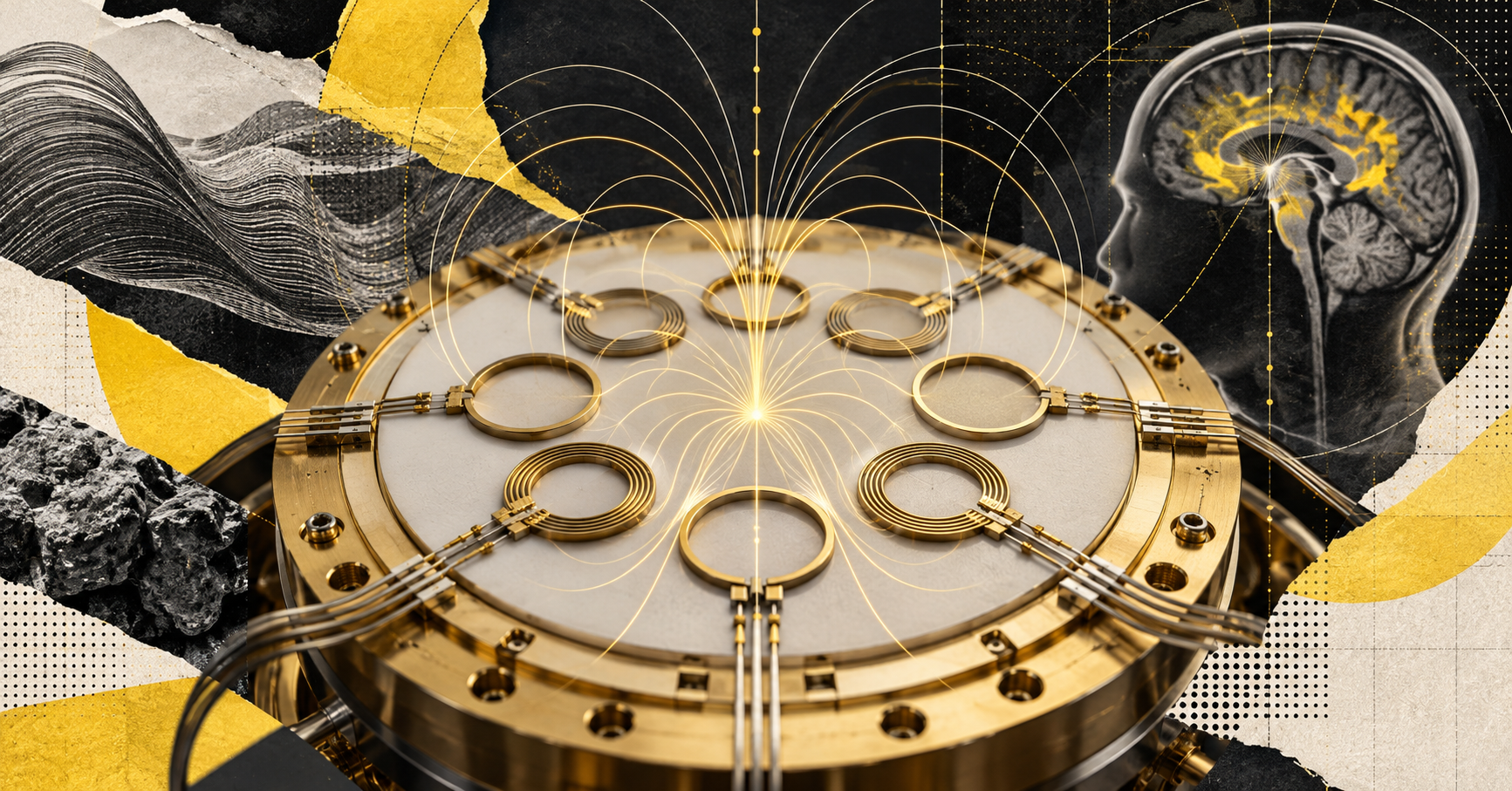
A new SQUID-array architecture uses equal-sized superconducting loops and strategically placed bare loops to locate absolute zero magnetic field while preserving the conditions needed for maximum sensitivity.
WHAT HAPPENED
Conventional superconducting quantum interference filters often use hundreds or thousands of differently sized loops to identify a zero field, which reduces overall sensitivity and complicates fabrication. The Adelaide team instead kept the loops the same size and removed the Josephson junctions from selected loops. Those bare loops created a synthetic spread of effective areas. Fabricated circuits operated at very low temperatures and behaved as the theory predicted.
WHY THIS IS HOPESLOP
The advance turns a long-standing sensor tradeoff into a simpler design choice. If further testing holds, the architecture could support more sensitive brain monitoring, radio-frequency receivers and electromagnetic sensing while making arrays easier to manufacture. It is a platform advance, not a finished medical device.
ORIGINAL SOURCEAdelaide University / Physical Review AppliedRead the original report
A DAILY ALLEGATION OF PROGRESS.
One good thing from the internet, every day. Nothing else.