WILD BOBWHITE COVEYS WERE SPOTTED AS TENNESSEE RESTORED 5,000 ACRES OF HABITAT.
Multiple coveys are an early sign that open-savanna restoration is rebuilding room for a long-declining bird.
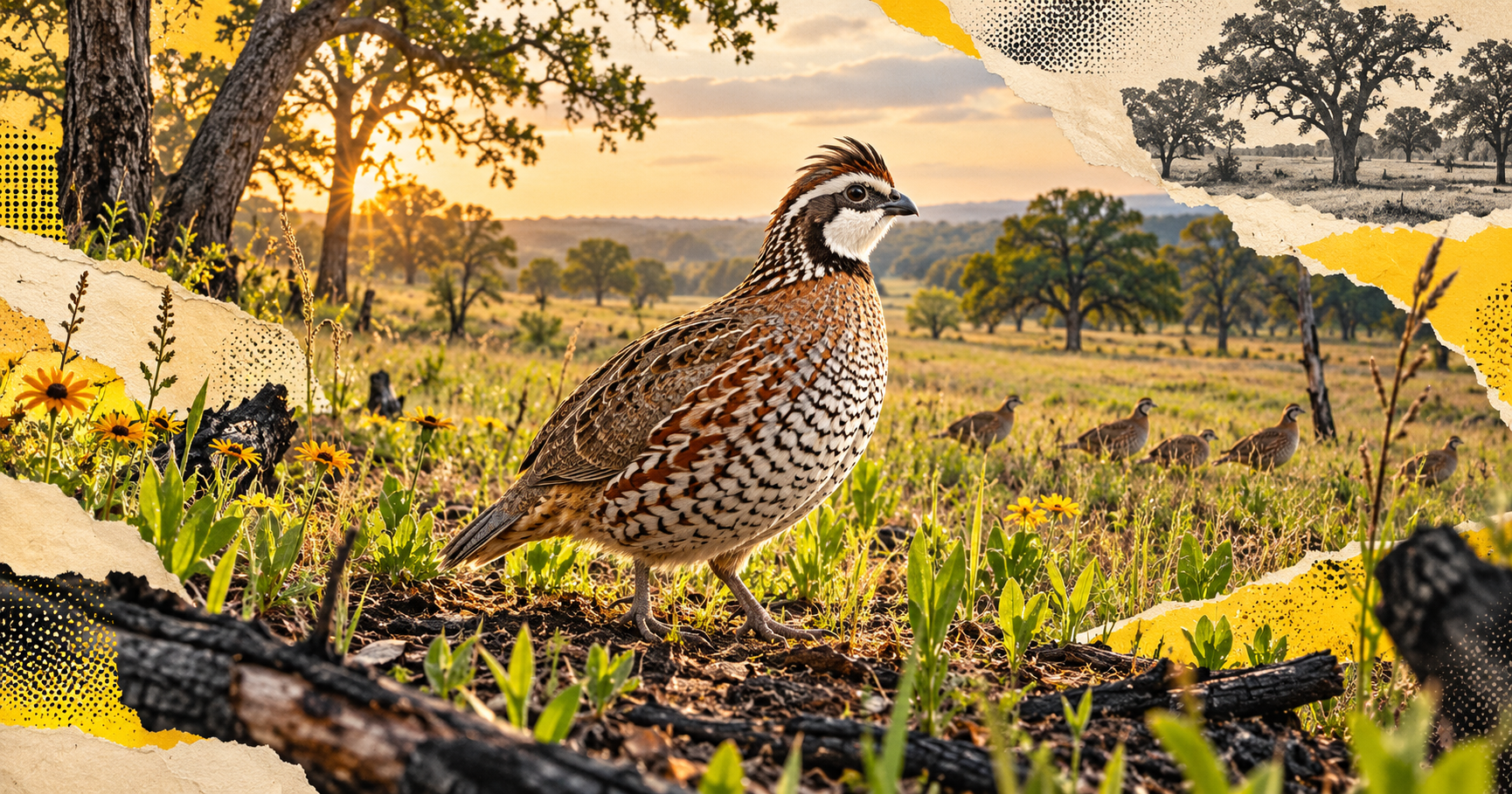
Multiple wild northern bobwhite coveys have appeared at the University of Tennessee’s Ames AgResearch and Education Center during the second year of a major habitat-restoration effort. The birds are an encouraging early signal across a landscape being reopened from dense forest to savanna.
WHAT HAPPENED
UT AgResearch and Tall Timbers are restoring bobwhite habitat across more than 5,000 acres at the Ames Center near Grand Junction, Tennessee. Since work began in 2025, roughly 1,500 acres have been treated through tree thinning, mulching and prescribed fire. Those methods create the open vegetation bobwhites need for nesting, raising broods and surviving year-round. The recent sighting included multiple coveys of wild birds at a site where pen-raised quail have been used for field trials because wild populations were too low. Project leaders may still use carefully planned translocation where local numbers cannot respond on their own. The restoration will continue for years; weather, costs and timber markets will affect the timeline. The sighting is a checkpoint, not a finish line.
WHY THIS IS HOPESLOP
Bobwhites do not return because someone releases a hopeful press statement. They need structure: open ground, nesting cover, food and recurring management. Seeing wild coveys after habitat work began is a tangible response from the ecosystem—and a reminder that wildlife recovery often starts by repairing the place, not merely counting the species.
ORIGINAL SOURCEUniversity of Tennessee Institute of AgricultureRead the original report
A DAILY ALLEGATION OF PROGRESS.
One good thing from the internet, every day. Nothing else.