SCIENTISTS SEPARATED PSILOCYBIN'S BRAIN REWIRING FROM ITS HALLUCINATORY PATHWAY—IN MICE.
A circuit map hints that plasticity and hallucination may not be inseparable.
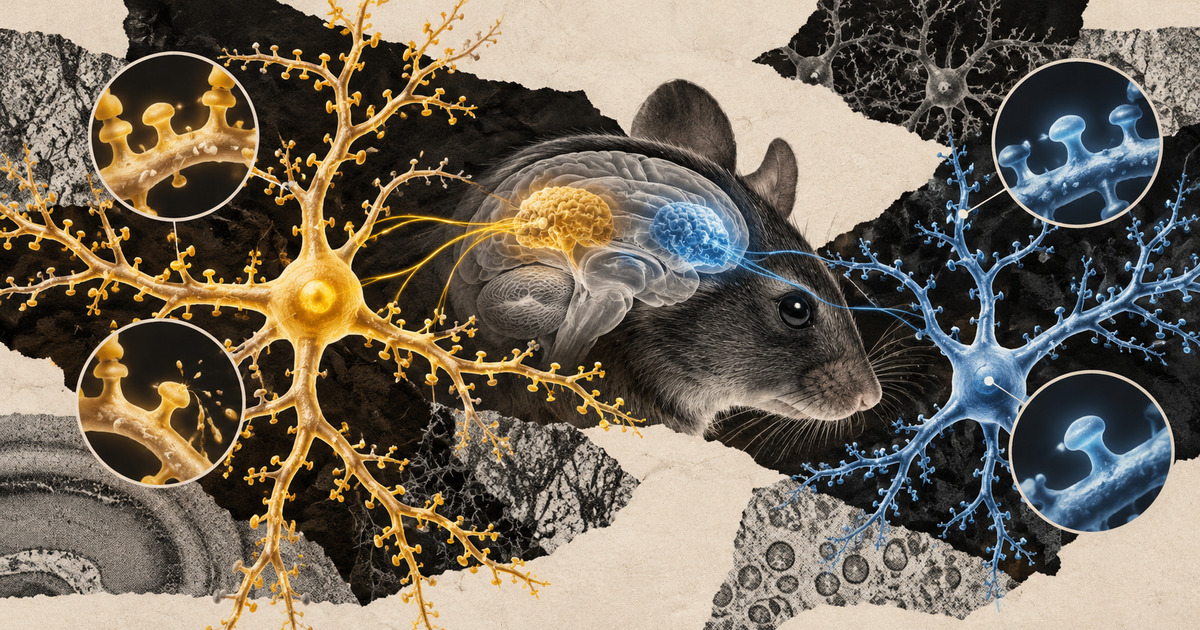
Researchers traced how psilocybin reshapes connections between the frontal cortex and other brain regions, then tested which receptor pathways were necessary for those changes.
WHAT HAPPENED
In mice, the team found that some lasting circuit remodeling persisted even when the hallucinatory 5-HT2A receptor pathway was blocked. The work identifies candidate mechanisms that could guide future therapies designed to retain neuroplastic effects while reducing perceptual disruption.
WHY THIS IS HOPESLOP
The study turns a broad psychedelic effect into a more precise circuit map. That is a useful step toward safer, better-targeted treatments—but it remains an animal result, not a clinical shortcut.
ORIGINAL SOURCEUC Santa Cruz / Nature NeuroscienceRead the original report
A DAILY ALLEGATION OF PROGRESS.
One good thing from the internet, every day. Nothing else.