PATIENT FEEDBACK CUT AN EPILEPSY MONITOR’S FALSE ALARMS BY ABOUT 80%.
A monitor improved when patients could explain what its sensors got wrong.
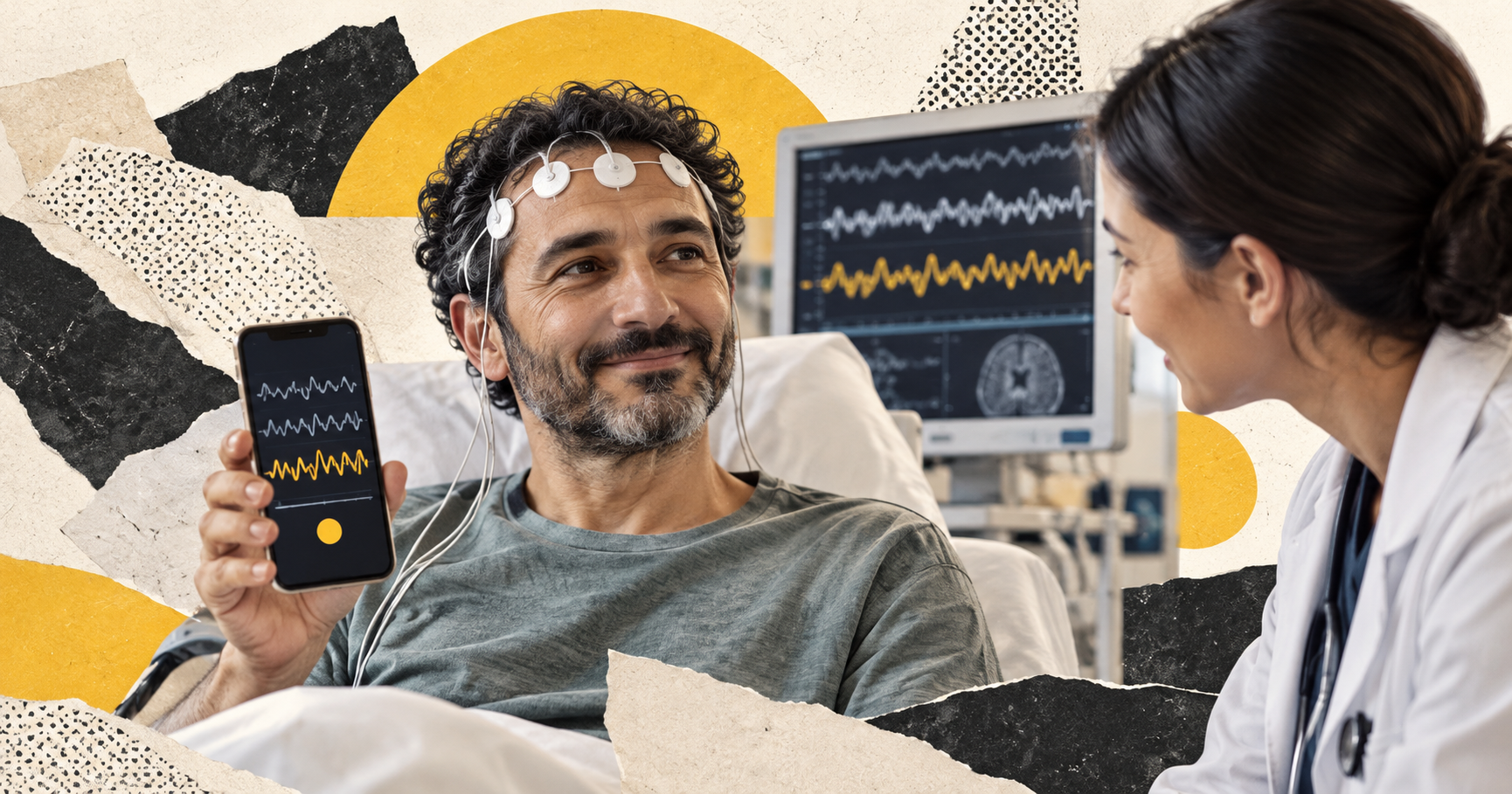
Thirteen patients in an epilepsy-monitoring unit could ask questions and flag mistakes in a real-time detection system. Their feedback reduced false alarms by roughly 80% during the study.
WHAT HAPPENED
Researchers linked wearable and bedside data to a conversational interface that let participants ask what the system was seeing and correct events it had misread. Across more than 1,300 messages, the interface produced answers rated above 92% for accuracy and relevance.
The patient corrections were not just commentary. They became signal: feeding those observations back into the workflow cut false alarms by about 80%. The study was small and inpatient, so larger and more diverse trials are needed before the approach can be treated as routine monitoring.
WHY THIS IS HOPESLOP
Medical AI is often framed as a machine watching a patient. This study treated the patient as a collaborator who knows things the sensor does not. Better monitoring came from making the system explain itself—and giving the person in the bed a way to answer back.
ORIGINAL SOURCENational Institutes of Health / Nature MedicineRead the original report
A DAILY ALLEGATION OF PROGRESS.
One good thing from the internet, every day. Nothing else.