A LAB-GROWN LUNG MODEL KEPT ITS OWN IMMUNE MEMORY.
Human lung organoids retained resident T cells, recognized SARS-CoV-2 and responded more strongly after a simulated booster.
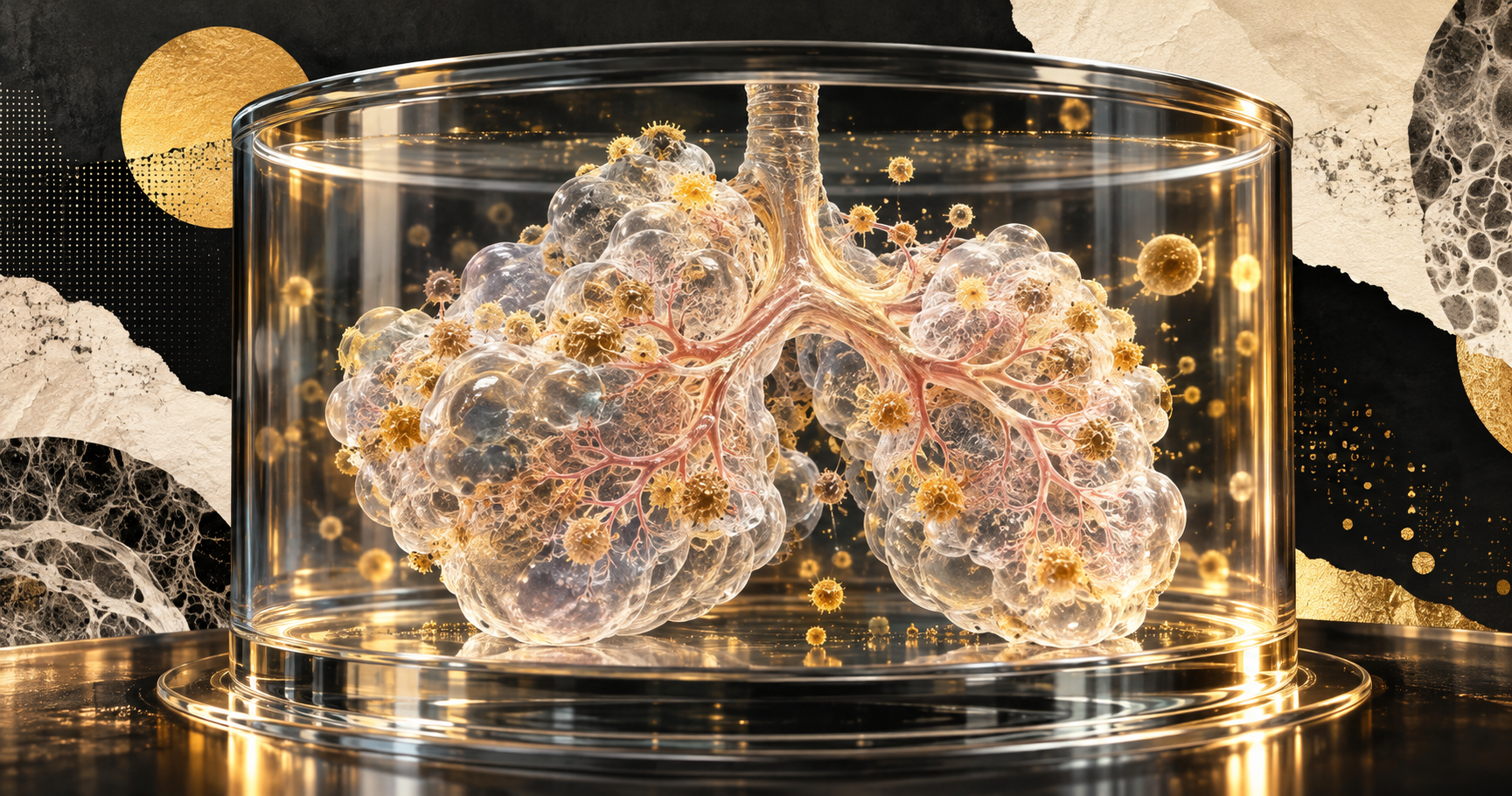
An NIH-supported Stanford team created long-lived human lung organoids that preserved resident immune cells and adaptive antiviral responses. The system could let researchers study local lung immunity in a human model and test ideas before clinical trials.
WHAT HAPPENED
Researchers placed intact distal-lung tissue from more than 220 volunteers into a three-dimensional air-liquid culture that mimicked gas exchange. The organoids survived for months with key immune populations intact. When infected with SARS-CoV-2, resident T cells became virus-specific; pre-stimulation with viral fragments reduced later infection in the model.
WHY THIS IS HOPESLOP
Researchers usually have to choose between simplified cell cultures and animal models. This platform preserves unusually rich human tissue behavior while making experiments repeatable. The result is not a treatment, but it is a better place to ask treatment questions.
ORIGINAL SOURCENational Institutes of Health / NatureRead the original report
A DAILY ALLEGATION OF PROGRESS.
One good thing from the internet, every day. Nothing else.