EIGHTEEN ENDANGERED QUOLLS GOT A CAT-FREE HEAD START.
Eighteen endangered Northern Quolls have been released into a 950-hectare predator-free refuge in north Queensland. The hard part—building a lasting population—starts now.
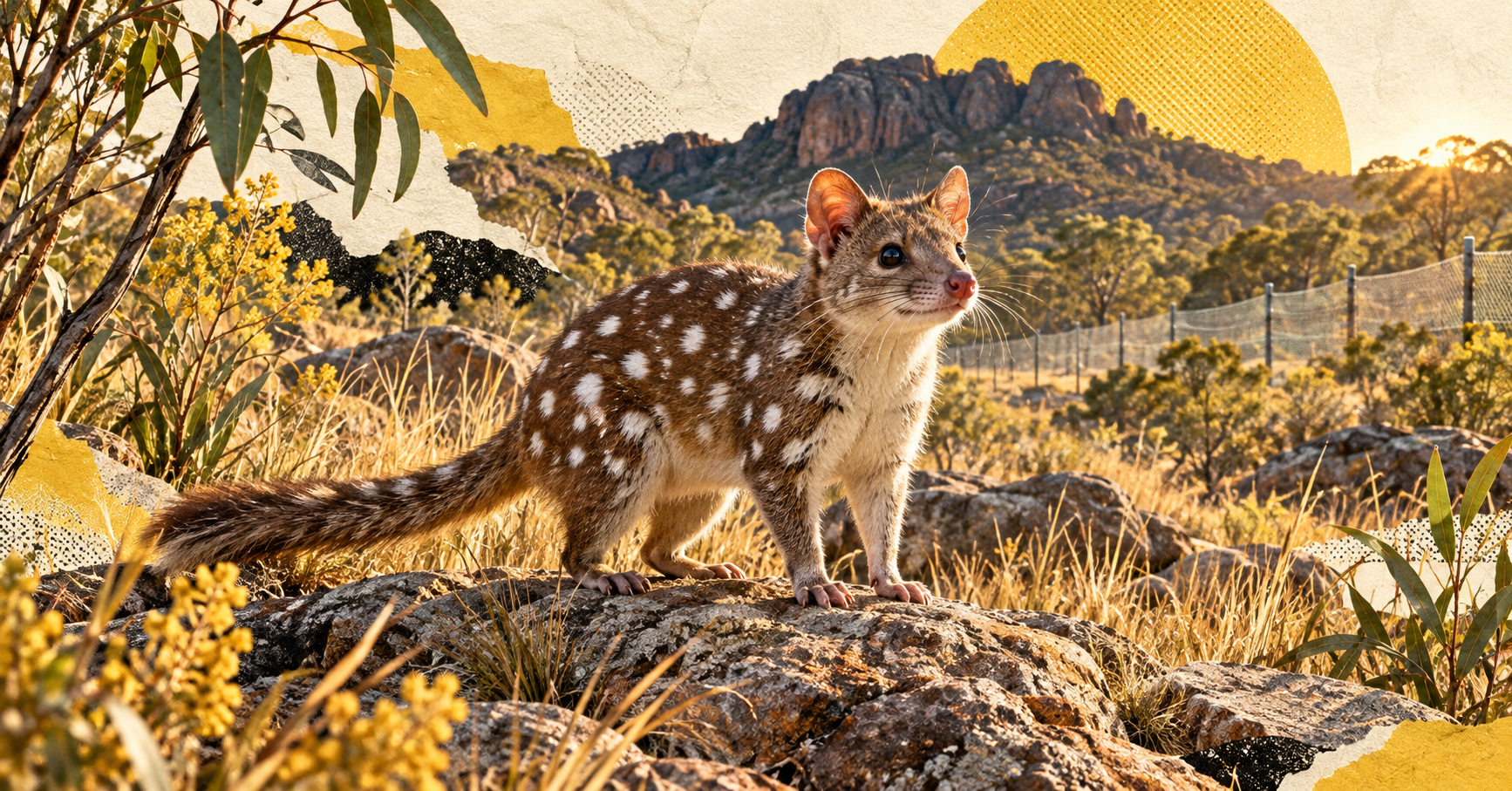
Eighteen endangered Northern Quolls have been given a new foothold in north Queensland. Australian Wildlife Conservancy has released the animals into a 950-hectare feral-predator-free fenced area at Mt Zero-Taravale Wildlife Sanctuary, on Gugu Badhun Country. It's the first step in a multi-year reintroduction designed to establish a secure mainland population—not a declaration that the species has recovered.
WHAT HAPPENED
Australian Wildlife Conservancy announced the release on October 6, 2026. Over six weeks, ecologists relocated 18 Northern Quolls into the protected sanctuary near Townsville. The founders were drawn from four source populations to help build genetic diversity without putting too much pressure on any one population.
The quolls have been fitted with telemetry collars. Ecologists will monitor how they settle using tracking, routine trapping and motion-sensor cameras. The fence is designed to keep feral predators, especially cats, away from the new population. It cannot eliminate every threat: invasive cane toads and unsuitable fire regimes remain serious problems for Northern Quolls elsewhere.
AWC hopes the fenced population could eventually grow to as many as 300 animals. That's a projection, not the current count. Some quolls may later disperse into the wider sanctuary if the reintroduction succeeds.
Photo credit: Brad Leue/Australian Wildlife Conservancy. Used with editorial permission.
WHY THIS IS HOPESLOP
The useful detail here is not that someone declared a species saved. They haven't. It's that ecologists actually moved 18 endangered animals into a deliberately protected place, with a plan to track whether it works.
Northern Quolls once occupied much more of northern Australia. Feral cats and the poison of invasive cane toads helped drive steep declines. A secure founding population won't reverse all that overnight—but it is a measurable attempt to change the odds. A fence, four source populations, 18 animals and a great deal of patient follow-up. That's an unusually concrete beginning.
ORIGINAL SOURCEAustralian Wildlife ConservancyRead the original report
A DAILY ALLEGATION OF PROGRESS.
One good thing from the internet, every day. Nothing else.