HEALTHY REEF SOUNDS DREW MORE CORAL AND FISH LARVAE.
Underwater playback helped young corals and fish find experimental reef structures in field trials off Oʻahu.
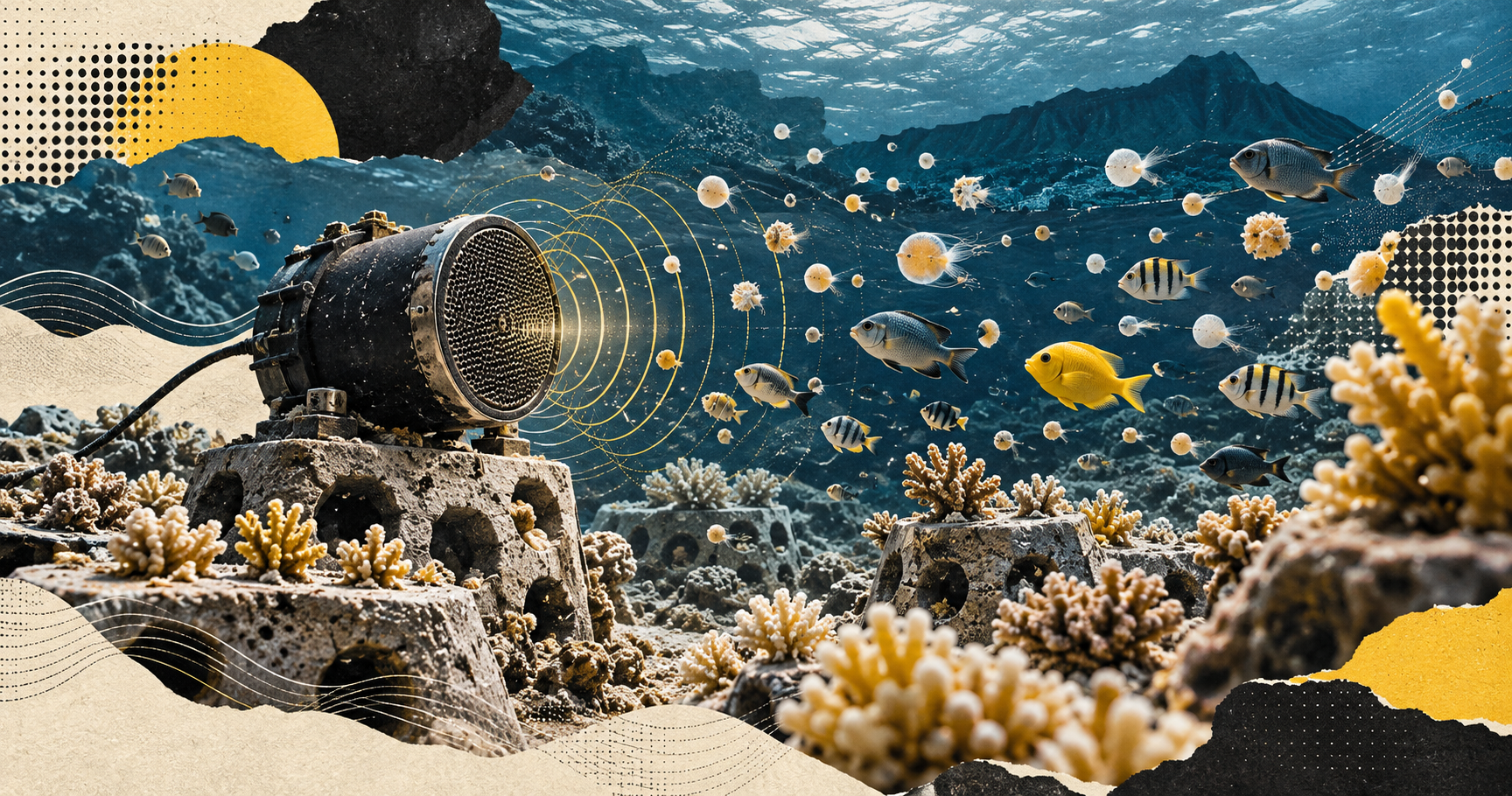
Two Scripps-led field studies found that playing recordings of a healthy reef around engineered structures increased coral settlement and drew substantially more fish larvae. The work combines acoustics with living coatings and three-dimensional habitats.
WHAT HAPPENED
Researchers recorded a healthy reef off Oʻahu and played it nightly from an underwater speaker beside 37 experimental structures. Coral settlement was highest nearest the sound, especially on structures treated with a living bacterial coating. Autonomous cameras at a related trial counted four to fourteen times more fish larvae at the acoustically enriched site than at a silent control.
WHY THIS IS HOPESLOP
A degraded reef can look available to humans while sounding empty to young animals searching for home. These trials suggest restoration may work better when it rebuilds signals as well as structure. The proof is still experimental, but it is measurable and headed into a larger hybrid-reef prototype.
ORIGINAL SOURCEScripps Institution of Oceanography, UC San Diego / Communications Biology / Scientific ReportsRead the original report
A DAILY ALLEGATION OF PROGRESS.
One good thing from the internet, every day. Nothing else.