Antarctic blue whales may have climbed from about 418 to roughly 4,000.
The model puts the population at 4,018—about 1.9% of its pre-whaling level—and estimates growth of 4.5% a year.
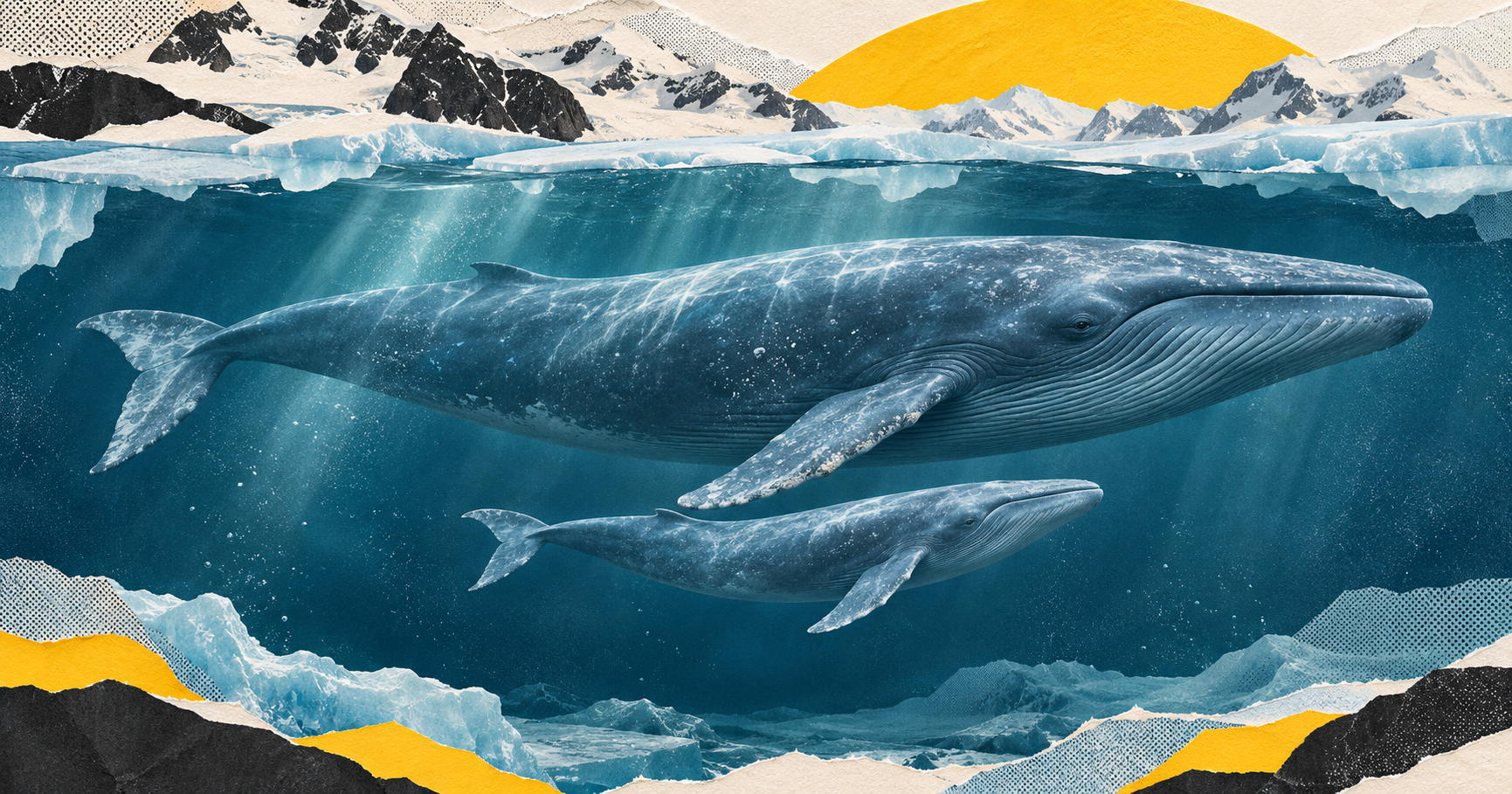
Researchers combined historical whaling records, three large line-transect survey eras and newer photo-identification data in a population model. It estimates 4,018 Antarctic blue whales in 2024, compared with about 418 after the last reported catch in 1973.
WHAT HAPPENED
The model estimates commercial whaling reduced the population by 99.8%. After more than five decades of protection, it now estimates annual growth of 4.5%, but the estimated 2024 population was still only 1.9% of pre-whaling abundance. Antarctic blue whales reproduce slowly, recent comprehensive ship surveys are limited, and the authors call for continued monitoring, including work to make acoustic data useful for abundance estimates.
WHY THIS IS HOPESLOP
The recovery is enormous in human terms and still tiny in whale terms. Protection appears to have moved the largest animals on Earth away from the brink, while the numbers make clear why the work cannot stop at a hopeful graph.
ORIGINAL SOURCEUniversity of Washington / Endangered Species ResearchRead the original report
A DAILY ALLEGATION OF PROGRESS.
One good thing from the internet, every day. Nothing else.
MORE HOPESLOP

The first 1,000 native trees took root along the Guadalupe River.
The locally collected seedlings begin a five-year, 50,000-tree recovery plan.

Two Kauaʻi state parks reopened after two months of hurricane repairs.
Major lookouts and several trails are open again, though repairs and closures continue.

Virginia voters approved an equal-marriage amendment.
The result reverses a 2006 state constitutional ban; certification is still pending.