KITES AND SPINNING EYES CUT THE ODDS OF SEABIRD BYCATCH IN WORKING NETS.
Simple above-water deterrents made a dangerous invisible net easier for diving birds to avoid.
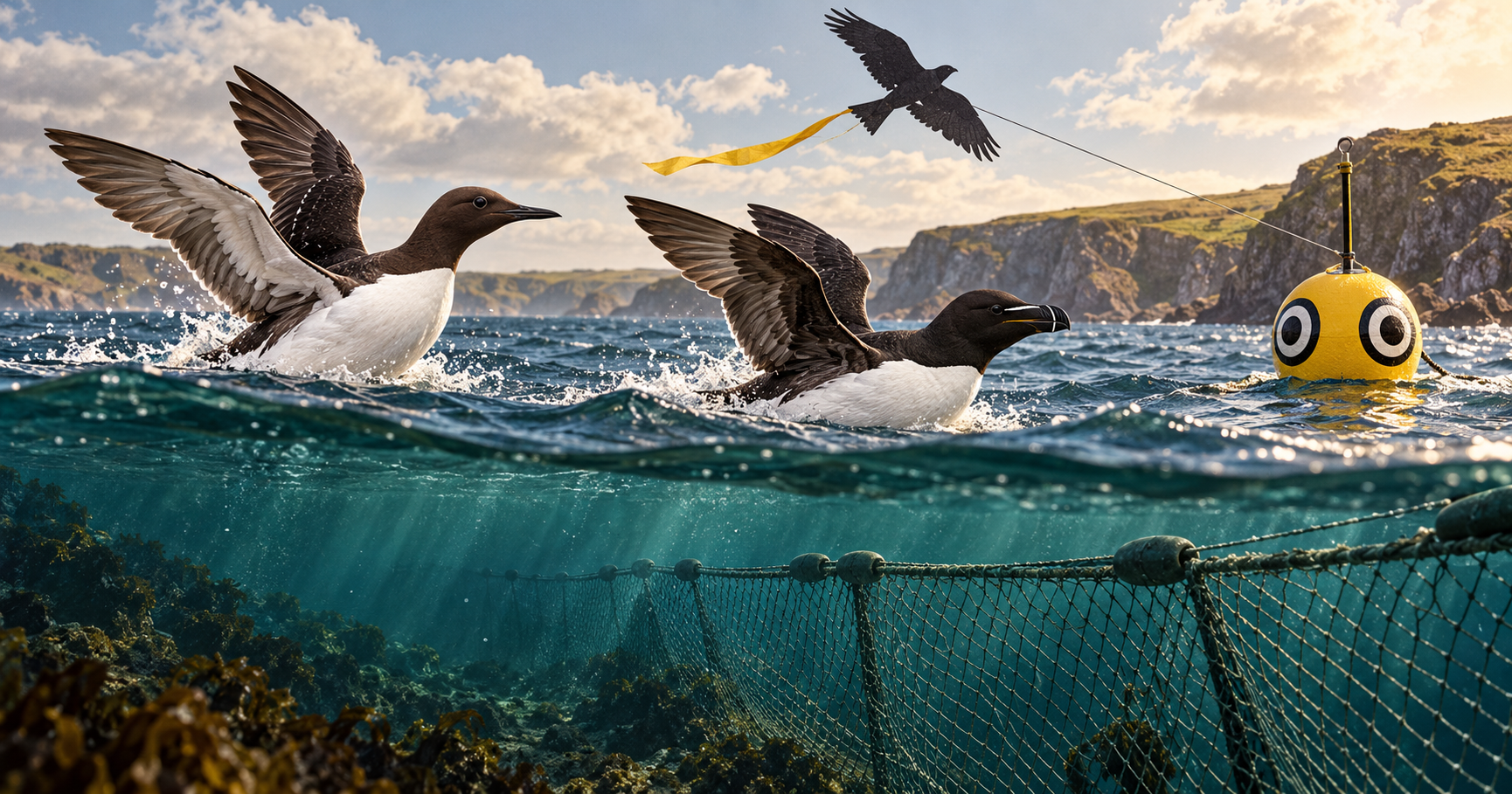
Researchers paired camera-monitored commercial gillnets with untreated control nets across 1,057 deployments off Cornwall between October 2023 and March 2025. Nets with bird-of-prey kites had 71% lower odds of catching guillemots or razorbills; nets with spinning looming-eye buoys had 59% lower odds.
WHAT HAPPENED
Ten fishers set approximately 129 kilometres of nets during the study. The team recorded 191 non-fish animals, including 153 birds. Bycatch risk peaked in January and February and in sea-bass and mackerel nets, suggesting deterrents could be deployed when and where they are most useful rather than year-round. Fishers helped refine the equipment and operating details.
WHY THIS IS HOPESLOP
Gillnet bycatch is not an unavoidable cost of fishing. Two relatively simple, visible signals reduced harm under real commercial conditions, and the seasonal pattern offers a way to target effort efficiently. The result is promising precisely because it was tested with working fishers—not just in a laboratory.
ORIGINAL SOURCEConservation Letters / University of ExeterRead the original report
A DAILY ALLEGATION OF PROGRESS.
One good thing from the internet, every day. Nothing else.