SIX PEOPLE WITH ADVANCED RETINAL DISEASE BECAME MEASURABLY MORE SENSITIVE TO LIGHT.
In a 10-person safety trial, an experimental optogenetic treatment produced clinically meaningful light-sensitivity gains in six participants. It did not restore normal sight.
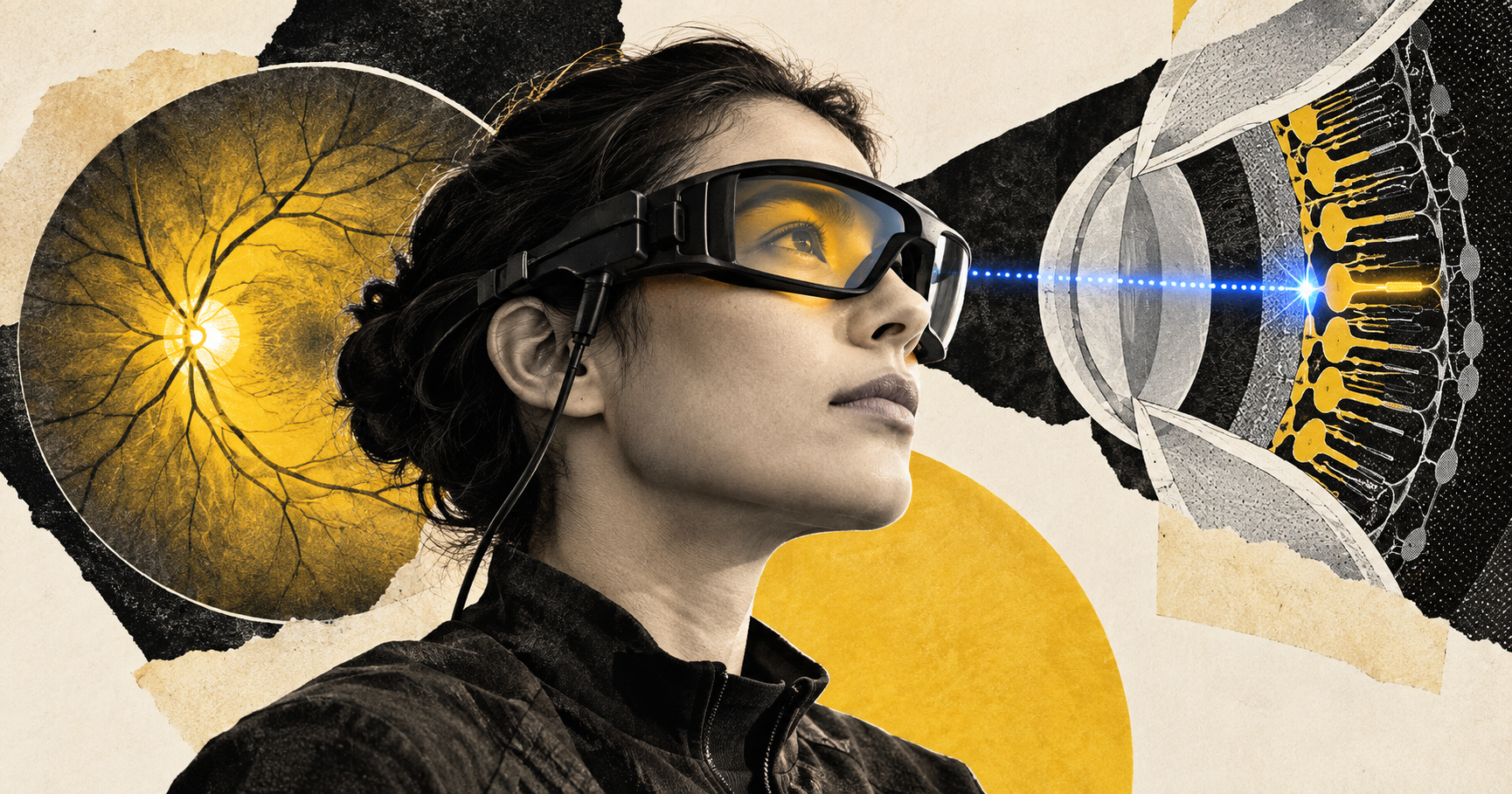
A small first-in-human study suggests that optogenetics can help some people with late-stage retinitis pigmentosa register light again. The result is not restored normal sight; it is a measured signal that a long-researched idea can reach the human visual system.
WHAT HAPPENED
GS030 combines a one-time gene therapy injection in one eye with goggles that project patterned light. The therapy is designed to make surviving retinal ganglion cells responsive to light, bypassing photoreceptors already lost to disease. Ten participants received the treatment. Six showed a clinically meaningful improvement in light sensitivity. Four of the eight people who completed behavioral testing improved on tasks such as detecting, locating or touching objects while using the goggles. The study was designed mainly to test safety, and the efficacy findings were exploratory.
WHY THIS IS HOPESLOP
There is no honest version of this story where a small safety trial becomes a cure. The hopeful part is narrower and sturdier: researchers sent an optogenetic signal through a damaged visual system and measured a response in people with very limited options. That is a real foothold for larger trials.
ORIGINAL SOURCENew England Journal of MedicineRead the original report
A DAILY ALLEGATION OF PROGRESS.
One good thing from the internet, every day. Nothing else.